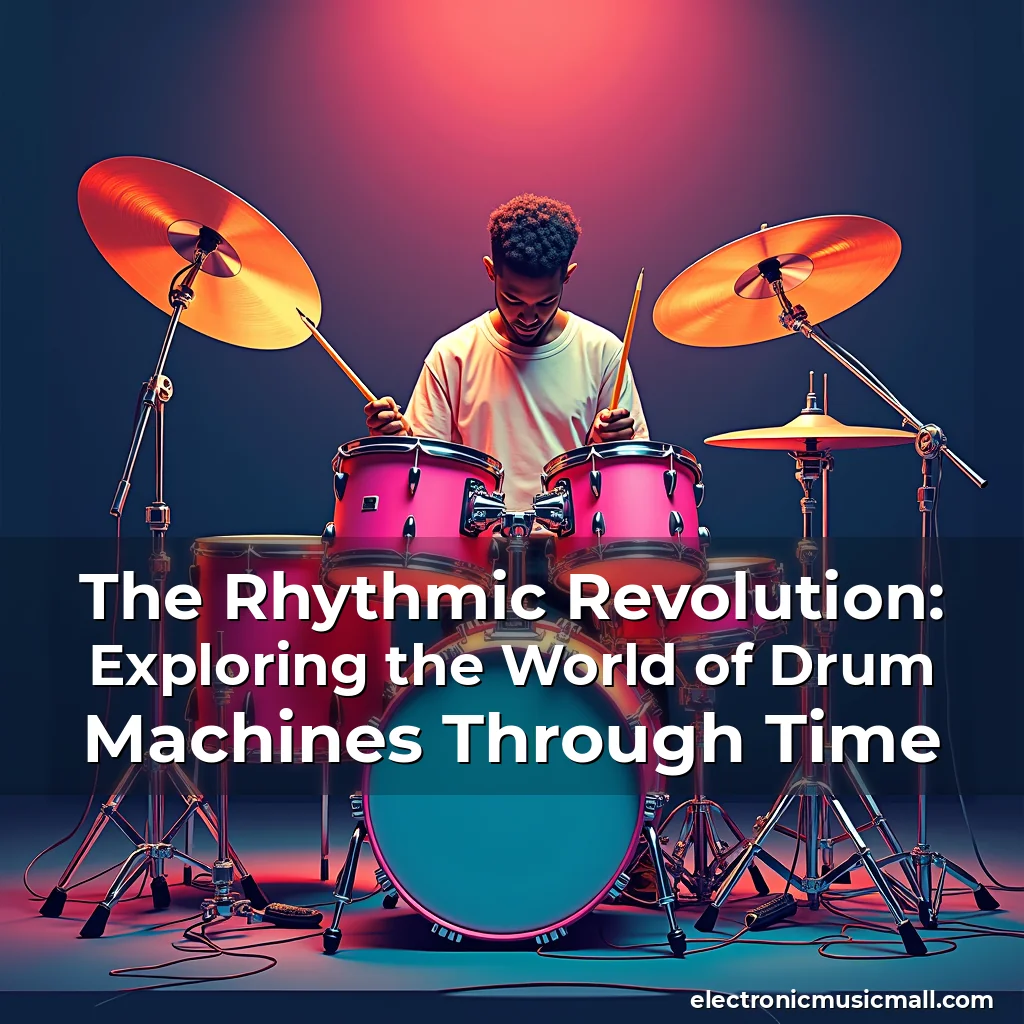
The Rhythmic Revolution: Exploring the World of Drum Machines Through Time
In an era where digital technology shapes every aspect of our lives, few innovations have had as profound an impact on musical expression as the drum machine. These compact devices, capable of generating complex rhythmic patterns with ease, have become essential tools for producers, DJs, and composers alike.
From their humble beginnings in the early 20th century to today’s advanced software-driven sequencers, drum machines continue to evolve while maintaining their core purpose – providing powerful percussive foundations for countless genres of music. This exploration will take you through the fascinating history, technical aspects, creative applications, and future potential of these remarkable instruments.
Origins of Mechanical Percussion: The Pre-Digital Era
The concept of mechanical rhythm generation dates back to the late 1800s when inventors experimented with automated percussion systems. One of the earliest examples was the Player Piano, which used punched rolls to produce melodies but could also be adapted for rhythmic accompaniment.
These early mechanisms relied on physical components such as hammers, levers, and springs to create sound. While they lacked the precision of modern electronics, they laid the groundwork for future developments by demonstrating how mechanical forces could be programmed to produce consistent rhythms.
As the 20th century progressed, manufacturers began incorporating electrical circuits into their designs. Devices like the Wurlitzer Sideman from the 1950s combined analog circuitry with traditional drum kits, allowing users to trigger pre-recorded sounds using foot pedals.
This hybrid approach opened new possibilities for live performance, enabling musicians to layer synthesized tones over acoustic drums without the need for additional players. It marked the beginning of a shift toward electronically generated percussion that would eventually lead to standalone drum machines.
Pioneering Innovations: The Birth of Modern Drum Machines
The true revolution came in the mid-1960s with the invention of the first dedicated drum machines. Roland’s TR-808, introduced in 1980, became one of the most influential models ever created despite its relatively simple design compared to later versions.
This device used analog synthesis techniques to generate distinctive drum sounds that differed significantly from real-world acoustics. Its deep bass kicks, snappy snares, and crisp hi-hats defined entire subgenres of electronic music and remain highly sought after even decades later.
Key features:
- Analog synthesis: Allowed creation of entirely new sonic textures not found in natural percussion
- User-programmable sequences: Enabled customization of rhythm patterns beyond factory presets
- Built-in effects processing: Included filters and modulation capabilities for sound shaping
Other notable pioneers included the LinnDrum from Sequential Circuits, which featured sampled acoustic drums for greater realism, and Akai’s MPC series, which integrated sampling capabilities with sequencing functions.
These early models established fundamental principles that still influence contemporary drum machines, including pattern-based composition, tempo control, and MIDI compatibility.
Evolving Technology: From Analog to Digital Domination
The transition from analog to digital technologies in the 1990s transformed drum machines into versatile production tools. Companies like Native Instruments and Arturia developed virtual instrument plugins that replicated classic hardware behaviors within DAW environments.
Digital drum machines offered several advantages over their predecessors, including expanded memory capacity, higher resolution samples, and enhanced editing capabilities. They also facilitated seamless integration with other digital audio workstations and MIDI controllers.
MIDI implementation became particularly significant during this period, allowing drum machines to communicate with computers and external synthesizers. This interoperability enabled complex studio setups where multiple devices could be synchronized and controlled remotely.
Advancements in computer processing power further accelerated innovation, leading to the development of hybrid units that combined physical controls with software-based sequencing engines.
Creative Applications Across Music Genres
Drum machines have left indelible marks across various musical styles, often serving as foundational elements in defining genre characteristics. In hip-hop, for example, the TR-808’s signature kick drum helped shape the sound of early boom bap beats.
Rave culture embraced the TR-909’s punchy snares and gated hi-hats to craft energetic dancefloor anthems. Meanwhile, techno producers utilized the DMX’s precise timing capabilities to develop intricate polyrhythms that drive forward-thinking compositions.
Genre-specific usage:
- Hip-Hop: Emphasis on deep basslines and syncopated rhythms for lyrical delivery
- House/Electro: Focus on steady four-on-the-floor patterns with rich tonal variations
- Trap: Incorporation of rapid hi-hat patterns and layered percussive elements
Even classical composers have begun experimenting with digital percussion, integrating synthesized rhythms into orchestral arrangements to create unexpected textural contrasts.
The versatility of drum machines continues to inspire experimentation, pushing boundaries between electronic and organic sound sources in ways previously unimaginable.
Modern-Day Masters: Leading Contemporary Drum Machine Models
Today’s market offers a wide array of drum machines catering to different needs and budgets. High-end options like theRoland TR-8 S and Korg Volca Beats combine vintage aesthetics with cutting-edge technology for professional-grade results.
The TR-8 S stands out as a premium choice, featuring eight independent modules each modeled after iconic Roland drum machines. This allows users to blend authentic retro sounds with modern enhancements like onboard effect processors and USB connectivity.
Korg’s Volca series provides affordable entry points for beginners while maintaining impressive sonic quality. Despite their small size, these units deliver substantial functionality through intuitive interfaces and robust built-in sequencers.
For those preferring software solutions, Native Instruments’ Battery and Ableton Live’s Drum Rack offer powerful alternatives that integrate seamlessly with existing digital workflows.
Each model represents a different philosophy regarding workflow preferences, whether prioritizing tactile interaction or streamlined digital efficiency based on individual creative requirements.
Choosing Your Perfect Drum Machine: A Buyer’s Guide
Selecting the right drum machine depends heavily on personal goals and available resources. Beginners might benefit from budget-friendly options that provide basic pattern programming and simple interface layouts.
Consider factors such as sample library depth, user interface intuitiveness, and expandability when making purchasing decisions. Some models excel at live performance due to their responsive touchpads, while others prioritize studio accuracy through advanced tuning algorithms.
It’s also worth exploring hybrid approaches that merge hardware with software ecosystems. Many current drum machines feature USB connections enabling direct integration with popular DAW platforms like Logic Pro X or FL Studio.
Before investing, test-play different models whenever possible to determine which feels most comfortable under pressure situations or extended sessions requiring frequent adjustments.
Finding Inspiration: Techniques for Creative Exploration
To unlock fresh ideas, start by studying masterpieces crafted using drum machines throughout history. Analyze how legendary tracks utilize groove variations, ghost notes, and dynamic shifts to maintain listener engagement.
Experimentation is key – don’t be afraid to break conventional rules by combining unexpected timbres or manipulating time signatures creatively. Sometimes abandoning strict grid structures can yield surprising rhythmic discoveries.
Try recording spontaneous improvisations using minimalistic settings before refining them through careful arrangement processes. Capturing raw energy often leads to more authentic-sounding compositions than overly polished approaches alone.
Collaborating with fellow musicians who use different types of percussion sources can broaden perspectives significantly. Cross-pollinating ideas between organic and synthetic domains frequently sparks innovative directions worthy of pursuit.
Remember that inspiration comes from everywhere; stay open-minded towards unconventional influences ranging from nature sounds to industrial machinery noises that might serve as intriguing rhythmic motifs.
The Future Soundscape: Emerging Trends & Technologies
Ongoing advancements in artificial intelligence are poised to redefine what we expect from drum machines. AI-powered systems now analyze vast libraries of musical data to suggest novel rhythmic combinations tailored specifically to user input.
Voice recognition technology enables hands-free operation, allowing performers to manipulate parameters vocally during live sets. This opens up exciting possibilities for stage presence enhancement through expressive gesture-based interactions.
Quantum computing research may ultimately lead to exponential increases in algorithmic complexity, potentially giving rise to self-evolving rhythmic patterns that adapt dynamically according to environmental stimuli rather than predetermined sequences.
While these futuristic visions seem far-off currently, incremental improvements in sensor technology, cloud synchronization capabilities, and augmented reality integrations hint at an evolving landscape ripe for continuous discovery.
Regardless of technological trajectories, one constant remains clear – drum machines will persistently shape musical evolution as long as human creativity demands new forms of rhythmic expression.
Conclusion
Drum machines have come a long way since their inception yet retain an enduring appeal rooted in their ability to transform abstract rhythmic concepts into tangible sonic experiences.
Whether you’re a seasoned producer seeking high-fidelity emulation of vintage classics or an aspiring artist looking for an accessible starting point, there exists a drum machine suited perfectly to meet your creative aspirations.

news is a contributor at Electronic Music Mall. We are committed to providing well-researched, accurate, and valuable content to our readers.